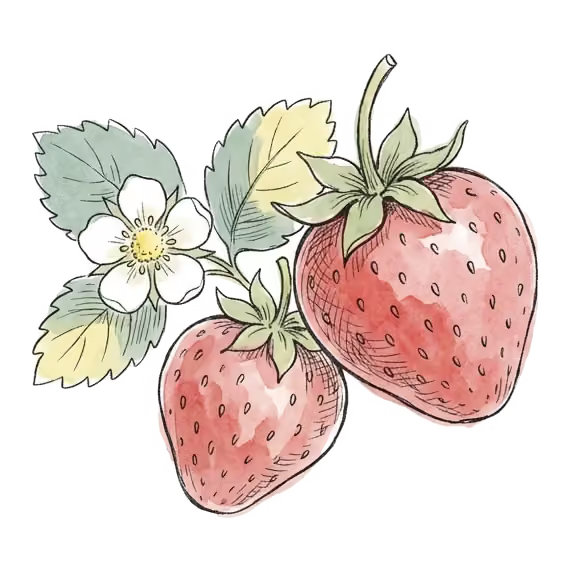
Strawberry (Fragaria × ananassa)
Fragaria × ananassa · also known as garden strawberry, cultivated strawberry, frutilla
By Superfoods Advisor Editors·July 3, 2026
What are strawberries good for? Vitamin C (59 mg per 100 g), a low glycemic index, and small trials on LDL cholesterol and memory. Nutrition and safety.
Strawberries (Fragaria × ananassa) are good mainly as a low-calorie source of vitamin C: 100 g has 32 kcal and about 59 mg of vitamin C, more than raw orange. Small randomized trials suggest freeze-dried strawberry powder may modestly lower LDL cholesterol in adults with high lipids, and early trials have looked at memory and blood sugar.
The garden strawberry, a member of the rose family (Rosaceae), is a hybrid species that arose in eighteenth-century France through the accidental cross-pollination of Fragaria virginiana (the Virginia or scarlet strawberry from eastern North America) and Fragaria chiloensis (the Chilean strawberry), both of which had been transported to European botanical gardens. The hybrid, which emerged in Brittany in the mid-eighteenth century, combined the fragrance and flavor of F. virginiana with the large fruit size of F. chiloensis and rapidly spread across European horticulture. Today, F. × ananassa accounts for virtually all commercial strawberry production worldwide, with global output of about 10.7 million metric tons in 2024, led by China, the United States, Egypt, Mexico, and Turkey (FAOSTAT).
Smaller wild strawberry species — notably Fragaria vesca (alpine strawberry) — were consumed and valued medicinally in Europe for centuries before the hybrid’s development. Historical herbals recommended wild strawberries and their leaves for digestive complaints, gout, and skin conditions. The modern garden strawberry’s phytochemical profile includes significant concentrations of ellagitannins (notably agrimoniin and sanguiin H-6), anthocyanins (predominantly pelargonidin-3-glucoside), and ascorbic acid. Human clinical research has focused most intensively on cardiovascular risk reduction, cognitive function, and glycemic response, with small randomized trials (roughly 27–60 participants) suggesting modest effects in at-risk populations.
Evidence at a glance
Active Compounds
- Ellagitannins (agrimoniin, sanguiin H-6, lambertianin C, and others): A major phenolic class, metabolized by gut microbiota to urolithins (urolithin A and B). Content and profile vary widely with cultivar and fall during ripening (Gasperotti et al., 2013); in an analysis of 15 Spanish cultivars, proanthocyanidins rather than ellagitannins were the most abundant phenolics (Buendía et al., 2010).
- Pelargonidin-3-glucoside: The principal anthocyanin, responsible for the characteristic red color. Total anthocyanins ranged from about 20 to 47 mg/100 g fresh weight across 15 cultivars (Buendía et al., 2010); concentrations peak in fully ripe fruit.
- Ellagic acid: Present as free acid and as glycosides in addition to tannin-bound forms. Ellagic acid, its glycosides, and ellagitannins are concentrated in the achenes (the small seeds on the fruit surface), which make up about 1% of fruit weight but supplied about 11% of total phenolics in one analysis (Aaby et al., 2005).
- Quercetin, kaempferol, and catechin: Minor flavonoid components.
- Ascorbic acid (vitamin C): ~59 mg/100 g (USDA FoodData Central); one of the higher vitamin C concentrations among commonly consumed fruits, slightly above raw orange (~53 mg/100 g) but below green kiwifruit (~93 mg/100 g) (USDA FoodData Central; USDA FoodData Central).
- Folate (vitamin B9): ~24 µg/100 g; relevant for reproductive-age women and populations with high folate requirements.
- Potassium: 153 mg/100 g; contributes to overall dietary potassium intake relevant to blood pressure.
- Hydroxycinnamic acids: p-Coumaric acid, caffeic acid, ferulic acid, and chlorogenic acid; contribute to total polyphenol load.
Nutritional Profile
Values for fresh strawberries, per 100 g (USDA FoodData Central, FDC ID 167762):
| Nutrient | Amount | % DV |
|---|---|---|
| Energy | 32 kcal | — |
| Water | 91.0 g | — |
| Carbohydrates | 7.7 g | — |
| Dietary fiber | 2.0 g | — |
| Sugars | 4.9 g | — |
| Protein | 0.7 g | — |
| Total fat | 0.3 g | — |
| Vitamin C | 58.8 mg | 65% |
| Folate | 24 µg | 6% |
| Potassium | 153 mg | 3% |
| Manganese | 0.39 mg | 17% |
| Magnesium | 13 mg | 3% |
| Vitamin K | 2.2 µg | 2% |
Strawberries are notably low in calories and have a glycemic index of approximately 40 (low) (Atkinson et al., 2008), partly because roughly half of their sugar is fructose, which raises blood glucose little (USDA FoodData Central).
Evidence for Purported Benefits
Cardiovascular Risk Reduction
Evidence:Limited Two small RCTs in adults with high lipids or metabolic syndrome show modest LDL reductions.
The strongest evidence base for strawberry consumption concerns cardiovascular risk markers. A 12-week randomized, dose-response controlled trial by Basu et al. (Journal of Nutrition, 2014; n = 60 adults with abdominal adiposity and elevated serum lipids) found that the higher dose of freeze-dried strawberry powder (50 g/day) significantly reduced serum total and LDL cholesterol and small LDL particles compared with control, and both doses (25 and 50 g/day) lowered the lipid-peroxidation marker malondialdehyde. No significant changes were observed in HDL, triglycerides, or adhesion molecules. An earlier 8-week RCT by Basu et al. (Nutrition Research, 2010; n = 27 adults with metabolic syndrome) found significant reductions in total and LDL cholesterol, small LDL particles, and the adhesion molecule VCAM-1 with 50 g/day of freeze-dried strawberries. Collectively, these studies suggest that regular strawberry consumption produces modest reductions in LDL cholesterol and lipid-peroxidation markers such as malondialdehyde in overweight or hyperlipidemic adults; effect sizes are generally smaller than those achievable with pharmacological lipid-lowering therapy and should not be considered a substitute.
Blood Pressure
Evidence:Limited Two small RCTs; results conflict.
Observational data linking habitual berry intake to lower hypertension risk are limited and vulnerable to confounding. In RCT evidence, Basu et al. (2014, cited above) did not find significant blood pressure reductions with strawberry powder in adults with abdominal adiposity and elevated lipids. A smaller 6-week randomized trial by Amani et al. (World Journal of Diabetes, 2014; n = 36 adults with type 2 diabetes) reported lower diastolic blood pressure with a daily freeze-dried strawberry beverage than with placebo; systolic pressure fell in both groups, with no significant difference between them. Evidence is insufficient for definitive conclusions about blood pressure effects.
Cognitive Function and Neuroprotection
Evidence:Limited A large cohort association plus two small RCTs reporting gains on some memory tasks.
Observational analyses from the Nurses’ Health Study (Devore et al., Annals of Neurology, 2012; n = 16,010 women aged 70 and older, with long-term diet assessed from 1980 and cognition tested over about 6 years) found that higher intake of strawberries and blueberries was associated with slower cognitive decline; comparing the highest and lowest intake categories, the difference was equivalent to roughly 1.5–2.5 years of cognitive aging after adjustment for major confounders. These observational associations cannot establish causation. In a small 90-day RCT by Miller et al. (British Journal of Nutrition, 2021; n = 37 adults aged 60–75), freeze-dried strawberry powder (24 g/day) improved performance on a virtual spatial navigation task and word recognition compared with placebo, though gait and balance did not change. A 12-week controlled trial by Krikorian et al. (Nutrients, 2023) in overweight middle-aged adults with insulin resistance and subjective cognitive decline reported reduced memory interference and fewer depressive symptoms with daily strawberry powder, but no change in metabolic measures. Mechanistic plausibility rests partly on animal work: in aged rats fed blueberries, anthocyanins were detected in the hippocampus, cortex, and other brain regions involved in learning and memory (Andres-Lacueva et al., 2005). The human evidence base is promising but requires confirmation in larger and longer trials.
Postprandial Glycemia
Evidence:Limited One set of small crossover meal studies in healthy women; long-term effects unstudied.
In laboratory assays, strawberry extracts inhibited the starch-digesting enzyme alpha-amylase, an effect attributed to their ellagitannins; alpha-glucosidase was inhibited more strongly by anthocyanin-rich blueberry and blackcurrant extracts (McDougall et al., 2005). In meal-test crossover studies by Törrönen et al. (Journal of Nutrition, 2013; n = 13–20 healthy women), consuming strawberry purée with white wheat bread significantly reduced the 2-hour postprandial insulin response compared with bread alone and improved the glycemic profile by about 36%. The fiber content of whole strawberries likely contributes to this effect, and the mechanism is consistent with data from other berry species. Long-term glycemic effects in people with type 2 diabetes or pre-diabetes have not been studied adequately.
Anti-Inflammatory Effects
Evidence:Limited Small RCTs on CRP conflict; mechanistic support comes from lab studies.
In addition to lipid-peroxidation markers, several strawberry RCTs have measured inflammatory biomarkers as secondary endpoints. Basu et al. (2014) found no significant change in serum CRP or adhesion molecules over 12 weeks, whereas a 6-week trial in 36 adults with type 2 diabetes (Moazen et al., Annals of Nutrition and Metabolism, 2013) reported lower CRP and malondialdehyde with freeze-dried strawberry supplementation. Giampieri et al. (Journal of Agricultural and Food Chemistry, 2014) reviewed mechanistic evidence on strawberry polyphenols, which are best known for anti-inflammatory and antioxidant actions in experimental models. Whether reductions in surrogate inflammatory biomarkers observed in short RCTs translate to reduced incidence of inflammatory disease outcomes in humans remains unknown.
Typical Use and Preparation
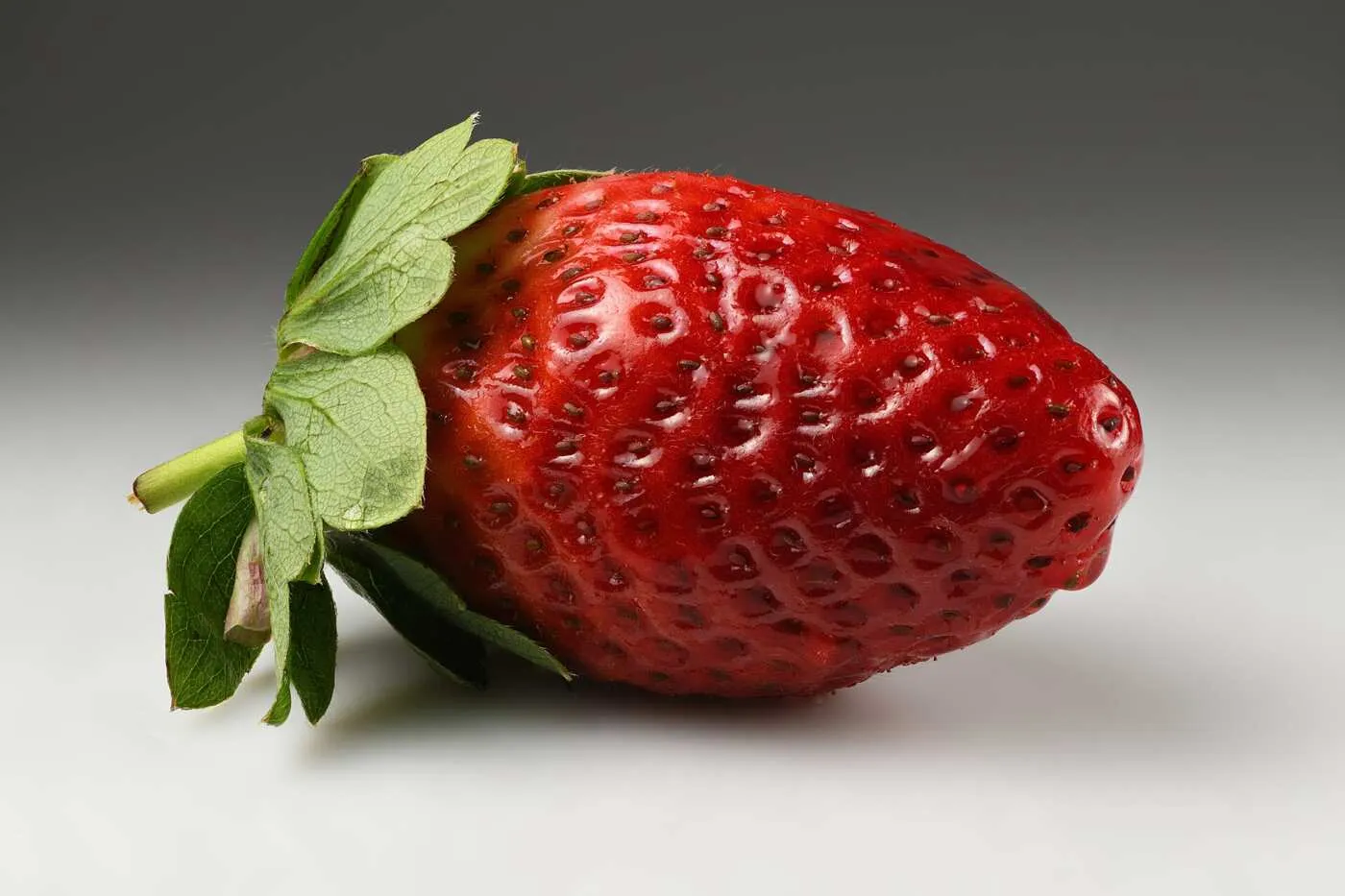 Photo: Ivar Leidus, CC BY-SA 4.0, via Wikimedia Commons
- Fresh (raw): The nutritionally preferred form; peak season is spring to early summer in temperate zones. Vitamin C and anthocyanin levels are highest in fully ripe, freshly harvested fruit. Store refrigerated and consume within 2–3 days.
- Frozen (IQF): Nutritionally comparable to fresh for most purposes; freezing retains much of the polyphenol and vitamin C content, though some is lost during prolonged storage. Suitable for smoothies, cooked applications, and year-round use.
- Freeze-dried powder: Concentrated form used in clinical research; one trial described 50 g of powder as roughly 3 cups of fresh strawberries (Basu et al., 2010). Available commercially; may contain added sweeteners — read labels.
- Culinary: Strawberries are versatile in both raw (salads, desserts, breakfast bowls) and cooked (jams, compotes, sauces) applications. Heating degrades vitamin C and anthocyanins; in one study, making low-sugar jam lowered total anthocyanins by about 28% (Bursać Kovačević et al., 2015).
- Strawberry leaf tea: Dried leaves contain tannins and are used in traditional European herbalism for digestive complaints; this is distinct from fruit consumption and is not covered in this entry.
Sliced strawberries top the matcha version among the chia pudding recipes. Strawberries also appear in the guides to superfoods for heart health and foods for blood sugar and metabolic health.
Safety, Interactions, and Contraindications
Strawberries are among the most commonly consumed fruits globally and are safe for the vast majority of the population. Relevant considerations:
- Allergic reactions: Reactions range from mild oral allergy syndrome (oropharyngeal itching and swelling, usually resolving within minutes) to, rarely, systemic urticaria or anaphylaxis. Individuals with birch pollen allergy may be at elevated risk because the strawberry allergen Fra a 1 is homologous to the birch allergen Bet v 1. Fra a 1 production appears linked to the red-color (flavonoid) pathway: a white strawberry mutant reported to be tolerated by allergic individuals was virtually free of it (Hjernø et al., 2006).
- Vitamin K: At 2.2 µg/100 g (USDA FoodData Central), strawberries have a low vitamin K content and are unlikely to significantly affect INR at typical serving sizes.
- Oxalates: Strawberries contain some oxalate, though reported amounts vary between analyses; individuals with a history of calcium oxalate kidney stones may wish to limit high-volume intake.
- Pesticide residues: F. × ananassa consistently appears near the top of the U.S. Environmental Working Group’s “Dirty Dozen” for detected pesticide residues. The EWG ranking reflects how often residues are detected, not whether they exceed legal tolerances; consumers concerned about residues may prefer organically grown or thoroughly washed fruit.
- Glucose response: Despite their sweetness, strawberries have a low glycemic index (~40; Atkinson et al., 2008) and modest glycemic load due to fiber and polyphenols; they are generally well tolerated in low-carbohydrate and diabetic dietary plans at standard serving sizes.
- Drug interactions: Interactions between strawberries and medicines have not been well studied; none is established at food intake levels.
Frequently Asked Questions
Are strawberries good for you?
Yes, for most people. Strawberries are low in calories (32 kcal per 100 g), high in vitamin C and a source of folate, potassium, manganese and polyphenols. Small trials suggest they may modestly improve LDL cholesterol in adults with high lipids. They are not a substitute for cholesterol-lowering treatment, and the brain and blood-sugar findings are still early.
Are strawberries good for diabetics?
Strawberries fit most diabetic eating plans. They have a glycemic index of about 40, contain only 7.7 g of carbohydrate per 100 g, and roughly half of their sugar is fructose. In meal studies, strawberry purée eaten with white bread lowered the insulin response in healthy women. Long-term effects in people with diabetes have not been studied adequately.
Are strawberries a berry?
Not in the strict botanical sense. Botanists generally classify the strawberry as an accessory fruit, with the red flesh described as growing from the swollen base of the flower and the small “seeds” on the surface, the achenes, counted as the true fruits. In one analysis the achenes were about 1% of fruit weight but supplied about 11% of total phenolics. In cooking and nutrition, strawberries are grouped with berries.
Strawberries vs blueberries: which is healthier?
Each has strengths. Per 100 g, strawberries have fewer calories (32 vs 57 kcal), about half the sugar (4.9 vs 10 g) and six times the vitamin C (58.8 vs 9.7 mg). Blueberries have more vitamin K and anthocyanins and a larger trial base for blood-vessel function. Eating both adds variety to the polyphenols in a diet.
Are strawberries safe to eat?
Strawberries are safe for the vast majority of people. The main risks are allergy, from mild mouth itching to rare anaphylaxis, which is more likely in people with birch pollen allergy, and pesticide residues: conventionally grown strawberries regularly top the EWG “Dirty Dozen” list. Washing fruit well or buying organic reduces residue exposure.
References
Show all 18 referencesShow fewer
- Basu, A., Betts, N. M., Nguyen, A., Newman, E. D., Fu, D., & Lyons, T. J. (2014). Freeze-dried strawberries lower serum cholesterol and lipid peroxidation in adults with abdominal adiposity and elevated serum lipids. Journal of Nutrition, 144(6), 830–837.
- Törrönen, R., Kolehmainen, M., Sarkkinen, E., Poutanen, K., Mykkänen, H., & Niskanen, L. (2013). Berries reduce postprandial insulin responses to wheat and rye breads in healthy women. Journal of Nutrition, 143(4), 430–436.
- Devore, E. E., Kang, J. H., Breteler, M. M. B., & Grodstein, F. (2012). Dietary intakes of berries and flavonoids in relation to cognitive decline. Annals of Neurology, 72(1), 135–143.
- Giampieri, F., Alvarez-Suarez, J. M., & Battino, M. (2014). Strawberry and human health: effects beyond antioxidant activity. Journal of Agricultural and Food Chemistry, 62(18), 3867–3876.
- Basu, A., Fu, D. X., Wilkinson, M., Simmons, B., Wu, M., Betts, N. M., Du, M., & Lyons, T. J. (2010). Strawberries decrease atherosclerotic markers in subjects with metabolic syndrome. Nutrition Research, 30(7), 462–469.
- USDA FoodData Central. (2019). Strawberries, raw. FDC ID 167762. U.S. Department of Agriculture.
- Miller, M. G., Thangthaeng, N., Rutledge, G. A., Scott, T. M., & Shukitt-Hale, B. (2021). Dietary strawberry improves cognition in a randomised, double-blind, placebo-controlled trial in older adults. British Journal of Nutrition, 126(2), 253–263.
- Krikorian, R., Shidler, M. D., & Summer, S. S. (2023). Early intervention in cognitive aging with strawberry supplementation. Nutrients, 15(20), 4431.
- Amani, R., Moazen, S., Shahbazian, H., Ahmadi, K., & Jalali, M. T. (2014). Flavonoid-rich beverage effects on lipid profile and blood pressure in diabetic patients. World Journal of Diabetes, 5(6), 962–968.
- Moazen, S., Amani, R., Homayouni Rad, A., Shahbazian, H., Ahmadi, K., & Taha Jalali, M. (2013). Effects of freeze-dried strawberry supplementation on metabolic biomarkers of atherosclerosis in subjects with type 2 diabetes: a randomized double-blind controlled trial. Annals of Nutrition and Metabolism, 63(3), 256–264.
- Buendía, B., Gil, M. I., Tudela, J. A., Gady, A. L., Medina, J. J., Soria, C., López, J. M., & Tomás-Barberán, F. A. (2010). HPLC-MS analysis of proanthocyanidin oligomers and other phenolics in 15 strawberry cultivars. Journal of Agricultural and Food Chemistry, 58(7), 3916–3926.
- Gasperotti, M., Masuero, D., Guella, G., Palmieri, L., Martinatti, P., Pojer, E., Mattivi, F., & Vrhovsek, U. (2013). Evolution of ellagitannin content and profile during fruit ripening in Fragaria spp. Journal of Agricultural and Food Chemistry, 61(36), 8597–8607.
- Atkinson, F. S., Foster-Powell, K., & Brand-Miller, J. C. (2008). International tables of glycemic index and glycemic load values: 2008. Diabetes Care, 31(12), 2281–2283.
- Bursać Kovačević, D., Putnik, P., Dragović-Uzelac, V., Vahčić, N., Babojelić, M. S., & Levaj, B. (2015). Influences of organically and conventionally grown strawberry cultivars on anthocyanins content and color in purees and low-sugar jams. Food Chemistry, 181, 94–100.
- Aaby, K., Skrede, G., & Wrolstad, R. E. (2005). Phenolic composition and antioxidant activities in flesh and achenes of strawberries (Fragaria ananassa). Journal of Agricultural and Food Chemistry, 53(10), 4032–4040.
- Andres-Lacueva, C., Shukitt-Hale, B., Galli, R. L., Jauregui, O., Lamuela-Raventos, R. M., & Joseph, J. A. (2005). Anthocyanins in aged blueberry-fed rats are found centrally and may enhance memory. Nutritional Neuroscience, 8(2), 111–120.
- McDougall, G. J., Shpiro, F., Dobson, P., Smith, P., Blake, A., & Stewart, D. (2005). Different polyphenolic components of soft fruits inhibit alpha-amylase and alpha-glucosidase. Journal of Agricultural and Food Chemistry, 53(7), 2760–2766.
- Hjernø, K., Alm, R., Canbäck, B., Matthiesen, R., Trajkovski, K., Björk, L., Roepstorff, P., & Emanuelsson, C. (2006). Down-regulation of the strawberry Bet v 1-homologous allergen in concert with the flavonoid biosynthesis pathway in colorless strawberry mutant. Proteomics, 6(5), 1574–1587.
Related content

More in Berries
- Acai Berry (Euterpe oleracea)
Is acai good for you? What small human trials show on acai benefits for antioxidants, lipids and blood sugar, plus nutrition, acai bowls and safety.
- Acerola Cherry (Malpighia emarginata)
Acerola cherry benefits come mostly from its vitamin C, about 1,680 mg per 100 g. What the evidence shows for immunity, skin and antioxidants, and safety.
- Blackberry (Rubus fruticosus)
What are blackberries good for? Fiber (5.3 g per 100 g), vitamin C, vitamin K and anthocyanins. Blackberry benefits, nutrition and what research shows.
- Blackcurrant (Ribes nigrum)
Blackcurrant benefits: a tart berry with 181 mg vitamin C per 100 g and dense anthocyanins. Small trials on eye fatigue, exercise recovery and cognition.
- Blueberry (Vaccinium corymbosum)
Are blueberries good for you? Trials suggest a daily cup (150 g) may help blood-vessel function; memory and blood-sugar data are early. Nutrition, safety.
- Camu Camu (Myrciaria dubia)
What is camu camu, and what are its benefits? An Amazonian berry with 1,800–3,000 mg vitamin C per 100 g, small trials on inflammation, and safety notes.

Curated by Superfoods Advisor Editors·Last updated