Mango (Mangifera indica)
Mangifera indica · also known as king of fruits, aam, mangot, manga
By Superfoods Advisor Editors·July 3, 2026
Mango benefits, weighed: mango is rich in vitamin C and beta-carotene, and small trials link it to easier bowel movements and lower fasting insulin.
Mango’s main benefits are nutritional: 100 g of ripe mango (Mangifera indica, a tropical stone fruit of the cashew family, Anacardiaceae) provides 60 kcal, 36.4 mg of vitamin C, about 40% of the Daily Value, plus beta-carotene and folate. Small trials suggest daily mango may ease constipation and lower fasting insulin, but each finding rests on a single short study.
Mango is native to the Indian subcontinent and Southeast Asia, where it has been cultivated for thousands of years. It spread along trade routes to East Africa and the Middle East before Portuguese explorers took it to West Africa and Brazil in the 16th century. India is the largest producer today.
In Ayurvedic tradition, nearly every part of the mango tree was given a therapeutic role: ripe fruit for digestive comfort and as a tonic, unripe green mango for heat-related complaints. Most of those uses have not been tested in clinical trials.
Evidence at a glance
Active Compounds
Mango flesh contains a diverse mixture of bioactive compounds whose concentrations vary substantially with cultivar, ripeness, and growing conditions.
Carotenoids: Beta-carotene is the principal carotenoid in most yellow- and orange-fleshed cultivars, contributing to the fruit’s characteristic color and serving as a precursor to vitamin A in the body. Zeaxanthin and lutein are present in smaller amounts. A 2009 USDA analysis of five commercial varieties published in the Journal of Agricultural and Food Chemistry reported beta-carotene content ranging from roughly 0.5 to 3.0 mg per 100 g of pulp depending on variety (Manthey & Perkins-Veazie, 2009).
Mangiferin: A C-glucosylxanthone that is among the most studied polyphenols in mango, found at higher concentrations in the peel and kernel than in the flesh. Mangiferin has demonstrated antioxidant, anti-inflammatory, and antidiabetic properties in cell-culture and animal models (Shang et al., 2025). Human evidence remains preliminary.
Gallic acid and gallotannins: Hydrolysable tannins concentrated in the peel and seed kernel. These compounds contribute to astringency in unripe fruit and have shown antibacterial activity in laboratory studies (Engels et al., 2009).
Quercetin and kaempferol: Flavonols present mainly in the peel. Quercetin-3-O-galactoside and quercetin-3-O-glucuronide are among the specific glycosides identified (Masibo & He, 2008).
Enzymes: Alpha- and beta-amylases break down the fruit’s own starch into sugars during ripening, which is a large part of why mango sweetens after harvest (Peroni et al., 2008). There is no human evidence that these enzymes aid digestion of other foods.
Dietary fiber: Both soluble (pectin) and insoluble fiber fractions are present. In a small human trial, eating mango raised fecal levels of valeric acid, a short-chain fatty acid produced by bacterial fermentation (Venancio et al., 2018).
Nutritional Profile
The following values represent ripe, raw mango flesh per 100 g (USDA FoodData Central, FDC ID 169910):
| Nutrient | Amount | % DV |
|---|---|---|
| Energy | 60 kcal | — |
| Water | 83.5 g | — |
| Carbohydrates | 14.98 g | — |
| Sugars | 13.66 g | — |
| Dietary fiber | 1.6 g | — |
| Protein | 0.82 g | — |
| Total fat | 0.38 g | — |
| Vitamin C | 36.4 mg | 40% |
| Vitamin A (RAE) | 54 µg | 6% |
| Folate | 43 µg | 11% |
| Vitamin B6 | 0.119 mg | 7% |
| Potassium | 168 mg | 4% |
| Copper | 0.111 mg | 12% |
| Magnesium | 10 mg | 2% |
Mango provides roughly 40% of the adult Daily Value for vitamin C per 100 g serving, making it a meaningful dietary source. Its relatively low fiber content (1.6 g/100 g) is lower than berries but still contributes to daily intake.
Evidence for Purported Benefits
Antioxidant Activity
Evidence:Preliminary High activity in laboratory assays; a single small pilot (n=20) found no change in inflammatory markers.
Multiple in vitro assays (DPPH, FRAP, ORAC) consistently demonstrate high radical-scavenging capacity in mango flesh and, to a greater degree, its peel. Human data are thinner: a 12-week single-arm pilot study by Evans et al. (2017) in Nutrition and Metabolic Insights found that 10 g/day of freeze-dried mango pulp did not change inflammatory mediators in 20 obese adults. Larger and longer trials are needed to establish whether the in vitro activity has clinical relevance.
Blood Glucose Regulation
Evidence:Preliminary One four-week, industry-funded RCT (n=48) lowered fasting insulin; fasting glucose did not change.
Despite its sugar content, mango has a low-to-moderate glycemic index: raw mango averaged 51 ± 5 in the international GI tables (Atkinson et al., 2008). A randomized controlled parallel trial by Pett et al. (2025, Nutrients) in 48 adults with overweight or obesity and chronic low-grade inflammation compared two cups of mango daily with a control product for 4 weeks. Fasting glucose and inflammatory markers did not differ between groups, but fasting insulin and HOMA-IR (an estimate of insulin resistance) were lower with mango. The study was short and partly funded by the National Mango Board, so it needs independent replication. Mangiferin inhibited alpha-glucosidase in enzyme assays (Amin et al., 2024); translation to meaningful glucose lowering in humans has not been established.
Gut Microbiome Support
Evidence:Preliminary A single four-week pilot RCT in adults with chronic constipation.
A 4-week randomized pilot trial (Venancio et al., 2018, Molecular Nutrition & Food Research) assigned adults with chronic constipation to 300 g of mango daily or an equivalent amount of fiber. The mango group showed greater improvements in stool frequency, consistency, and shape, higher fecal short-chain fatty acid (valeric acid), and lower plasma endotoxin and interleukin-6. The authors attributed the effect beyond fiber partly to mango’s polyphenols. Replication in larger, diverse populations is warranted.
Immune Support (Vitamin C)
Evidence:Moderate Mango is a good vitamin C source; the benefit is inferred from nutrient content, not mango trials.
The vitamin C content of mango (36 mg/100 g) contributes meaningfully to the adult RDA of 75 mg (women) to 90 mg (men) (Linus Pauling Institute). Vitamin C’s role in supporting immune cell function and acting as a cofactor for collagen biosynthesis is well established. However, no large randomized trial has tested mango specifically for immune outcomes; the benefit is inferred from the fruit’s nutrient content.
Skin Health
Evidence:Preliminary A single small pilot with inconsistent results: the lower dose reduced wrinkles, the higher dose increased them.
Some marketing claims assert that mango carotenoids and vitamin C improve skin appearance. A small 16-week pilot trial by Fam et al. (2020) in Nutrients found that eating 85 g of Ataulfo mango reduced deep wrinkle severity in fair-skinned postmenopausal women compared with baseline, while a 250 g intake was associated with increased wrinkle severity. This single small study requires independent replication before conclusions can be drawn.
Typical Use and Preparation
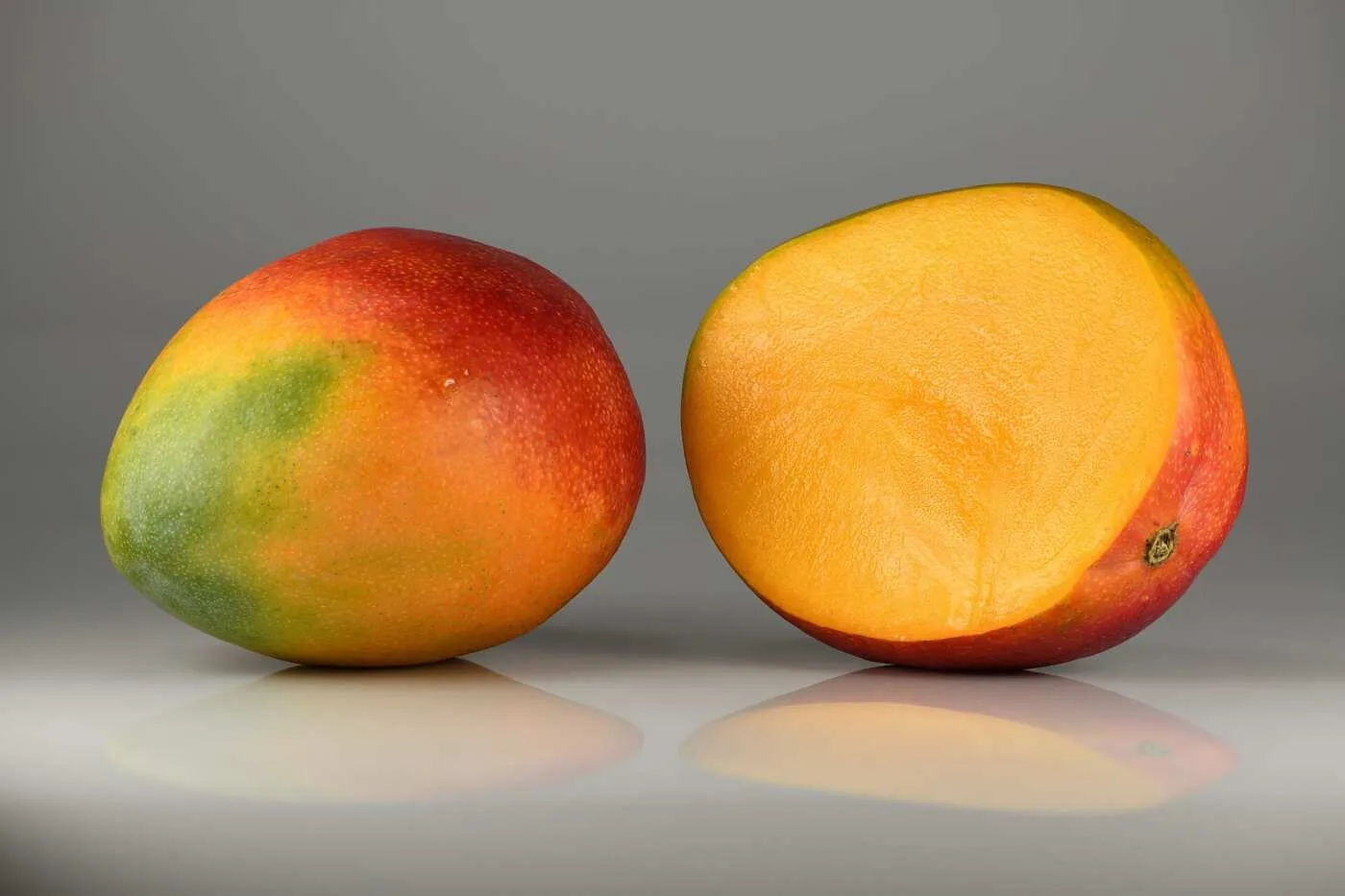 Photo: Ivar Leidus, CC BY-SA 4.0, via Wikimedia Commons
Ripe mango is most often consumed fresh, either cut from the stone or scooped from halved fruit. It is widely used in smoothies, salsas, chutneys, and dried-fruit preparations. Unripe green mango is a staple in South and Southeast Asian cuisines, used raw in salads (such as Thai green mango salad) and cooked in pickles and curries.
Mango peel, though edible and nutritionally dense (particularly in mangiferin and fiber), is rarely eaten in Western markets, and it carries the urushiol-related allergens described in the Safety section. Mango seed kernels are used in some traditional medicine preparations and as a source of mango butter for cosmetic applications.
Commercially, mango is available as fresh fruit, frozen chunks, dried slices, juice, puree, and standardized extracts (typically standardized to mangiferin content). Dried and juice forms concentrate sugars substantially; individuals monitoring carbohydrate intake should account for this.
Frozen mango goes into the spirulina-and-hemp blend among the superfood smoothie recipes. The vitamin C and collagen link is covered in the skin health nutrition guide, and the glycemic effects of fiber and carbohydrate in the blood sugar and metabolic health guide. Papaya is a comparable tropical source of vitamin C and carotenoids.
Safety, Interactions, and Contraindications
General tolerance: Mango is a widely eaten food. Its best-documented adverse effects are allergic reactions, which are rare (see below).
Urushiol cross-reactivity: Mango contains alkenyl resorcinols related to urushiol, the allergen in poison ivy and poison oak (Toxicodendron spp.), and patch testing has shown cross-reactions between the two (Oka et al., 2004). People already sensitized to poison ivy or oak may develop contact dermatitis around the mouth or on the skin, sometimes on their first exposure to mango, mostly after handling the peel or sap. A 2021 review found mango contact dermatitis to be rare, with 37 reported patients, most of them from regions where poison ivy and oak are common (Berghea et al., 2021).
IgE-mediated allergy: True mango allergy is uncommon but documented. IgE cross-reacting between latex and mango has been described as part of the latex-fruit syndrome (Brehler et al., 1997). Symptoms may include urticaria, angioedema, or, rarely, anaphylaxis. Individuals with known latex allergy should exercise caution.
Drug interactions: Case reports describe rises in INR in people taking warfarin after they ate mango, which returned to range once mango was stopped (Monterrey-Rodríguez, 2002; Rattanasuwan et al., 2025). The mechanism is unclear, and a review of warfarin-fruit interactions judged the evidence scarce but advised clinicians to ask about recent mango intake when INR is unstable (Norwood et al., 2015). People on warfarin should keep mango intake consistent and tell their clinician about large changes. Separately, a mango stem-bark extract and mangiferin lowered the activity of several cytochrome P450 enzymes, including CYP3A4 and CYP2C9, in cultured human liver cells (Rodeiro et al., 2013); clinical relevance in humans is unknown. Individuals taking narrow therapeutic-index medications should consult a healthcare provider before using concentrated mango extracts.
Diabetes management: Because mango contains fermentable sugars (approximately 13–14 g/100 g), individuals with diabetes or insulin resistance should monitor portion size and blood glucose response, particularly with juice or dried forms where fiber is reduced or absent.
Pregnancy and lactation: Mango eaten as food is part of ordinary diets worldwide. There are no safety data for concentrated mango extracts during pregnancy or breastfeeding.
This entry is for informational purposes only and does not constitute medical advice. Consult a qualified healthcare provider before using any supplement or making dietary changes to manage a health condition.
Frequently Asked Questions
Is mango good for you?
For most people, yes. Mango is a good source of vitamin C and supplies beta-carotene, folate and some fiber for 60 kcal per 100 g. Preliminary trials link daily mango to easier bowel movements and lower fasting insulin, though each rests on one small, short study. Its sugar content, about 13.7 g per 100 g, is worth counting for anyone managing blood glucose.
Does mango have fiber?
Some. Ripe mango contains about 1.6 g of dietary fiber per 100 g, as a mix of soluble pectin and insoluble fiber, which is lower than berries. In a small pilot trial in adults with chronic constipation, 300 g of mango daily improved stool frequency and consistency more than the same amount of fiber, suggesting its polyphenols may also play a role.
Is mango good for diabetics?
Mango can fit a diabetes meal plan in measured portions. Its glycemic index is low to moderate, about 51, but it contains roughly 13 to 14 g of sugar per 100 g, and dried mango and juice concentrate sugar further. A four-week trial found lower fasting insulin with daily mango in adults with overweight, but it did not include people with diabetes.
How much mango is too much?
There is no official limit. Trials have used between 85 g and 300 g a day, and two cups daily in one study. A small skin pilot found that 85 g a day reduced deep wrinkles while 250 g a day was associated with more, a result that needs replication. Larger amounts mainly add sugar, and people on warfarin should keep intake steady.
Is mango skin edible?
It is edible but rarely eaten. Mango peel is rich in mangiferin and fiber, but it also carries alkenyl resorcinols related to urushiol, the allergen in poison ivy and poison oak. People sensitized to those plants can develop a rash around the mouth or on the skin after handling the peel or sap. A review found such cases rare, with 37 reported patients.
Is mango good for your skin?
The evidence is thin. One 16-week pilot trial in fair-skinned postmenopausal women found that 85 g of Ataulfo mango daily reduced deep wrinkle severity compared with baseline, while 250 g daily was associated with increased wrinkle severity. A single small study with mixed results cannot support skin claims, though mango’s vitamin C does contribute to collagen synthesis.
References
Show all 20 referencesShow fewer
- Manthey, J. A., & Perkins-Veazie, P. (2009). Influences of harvest date and location on the levels of beta-carotene, ascorbic acid, total phenols, the in vitro antioxidant capacity, and phenolic profiles of five commercial varieties of mango (Mangifera indica L.). Journal of Agricultural and Food Chemistry, 57(22), 10825–10830.
- Venancio, V. P., Kim, H., Sirven, M. A., et al. (2018). Polyphenol-rich mango (Mangifera indica L.) ameliorate functional constipation symptoms in humans beyond equivalent amount of fiber. Molecular Nutrition & Food Research, 62(12), e1701034.
- Evans, S. F., Beebe, M., Mahmood, M., et al. (2017). Mango supplementation has no effects on inflammatory mediators in obese adults. Nutrition and Metabolic Insights, 10, 1178638817731770.
- Fam, V. W., Holt, R. R., Keen, C. L., Sivamani, R. K., & Hackman, R. M. (2020). Prospective evaluation of mango fruit intake on facial wrinkles and erythema in postmenopausal women: a randomized clinical pilot study. Nutrients, 12(11), 3381.
- Masibo, M., & He, Q. (2008). Major mango polyphenols and their potential significance to human health. Comprehensive Reviews in Food Science and Food Safety, 7(4), 309–319.
- Pett, K. D., Alex, P. G., Weisfuss, C., Sandhu, A., Burton-Freeman, B., & Edirisinghe, I. (2025). Mango consumption is associated with increased insulin sensitivity in participants with overweight/obesity and chronic low-grade inflammation. Nutrients, 17(3), 490.
- USDA FoodData Central. Mangos, raw. FDC ID 169910. U.S. Department of Agriculture.
- Atkinson, F. S., Foster-Powell, K., & Brand-Miller, J. C. (2008). International tables of glycemic index and glycemic load values: 2008. Diabetes Care, 31(12), 2281–2283.
- Linus Pauling Institute Micronutrient Information Center. Vitamin C. Oregon State University.
- Monterrey-Rodríguez, J. (2002). Interaction between warfarin and mango fruit. Annals of Pharmacotherapy, 36(5), 940–941.
- Rattanasuwan, P., et al. (2025). Metabolic insights into the warfarin-mango interaction: a pilot study integrating clinical observations and metabolomics. ADMET and DMPK, 13(3), 2740.
- Norwood, D. A., Parke, C. K., & Rappa, L. R. (2015). A comprehensive review of potential warfarin-fruit interactions. Journal of Pharmacy Practice, 28(6), 561–571.
- Rodeiro, I., et al. (2013). Mangifera indica L. extract and mangiferin modulate cytochrome P450 and UDP-glucuronosyltransferase enzymes in primary cultures of human hepatocytes. Phytotherapy Research, 27(5), 745–752.
- Oka, K., Saito, F., Yasuhara, T., & Sugimoto, A. (2004). A study of cross-reactions between mango contact allergens and urushiol. Contact Dermatitis, 51(5–6), 292–296.
- Berghea, E. C., Craiu, M., Ali, S., Corcea, S. L., & Bumbacea, R. S. (2021). Contact allergy induced by mango (Mangifera indica): a relevant topic? Medicina, 57(11), 1240.
- Brehler, R., et al. (1997). “Latex-fruit syndrome”: frequency of cross-reacting IgE antibodies. Allergy, 52(4), 404–410.
- Engels, C., Knödler, M., Zhao, Y. Y., Carle, R., Gänzle, M. G., & Schieber, A. (2009). Antimicrobial activity of gallotannins isolated from mango (Mangifera indica L.) kernels. Journal of Agricultural and Food Chemistry, 57(17), 7712–7718.
- Peroni, F. H., et al. (2008). Mango starch degradation. II. The binding of alpha-amylase and beta-amylase to the starch granule. Journal of Agricultural and Food Chemistry, 56(16), 7416–7421.
- Amin, A., et al. (2024). Mango peel extracts and mangiferin chromatographic Fourier-transform infrared correlation with antioxidant, antidiabetic, and advanced glycation end product inhibitory potentials using in silico modeling and in vitro assays. Biomedical Chromatography, 38(9), e5936.
- Shang, Y., et al. (2025). Mangiferin: sources, anti-inflammatory activities, and molecular mechanisms. Journal of Agricultural and Food Chemistry, 73(43), 27145–27160.
Related content

More in Fruits
- Apple (Malus domestica)
Are apples good for you? Apples supply pectin fiber and quercetin, and large cohort studies link regular intake to lower heart disease and diabetes risk.
- Avocado (Persea americana)
Is avocado good for you? Avocado is high in monounsaturated fat, fiber and potassium, and small trials link a daily avocado to lower LDL cholesterol.
- Banana (Musa acuminata)
Are bananas good for you? Bananas supply potassium, vitamin B6 and fiber, and green bananas add resistant starch. The evidence, and who should limit them.
- Cherry (Prunus avium / Prunus cerasus)
Tart cherry juice benefits, weighed: small trials suggest faster muscle recovery and longer sleep, and gout data are early. Sweet vs tart cherry nutrition.
- Grapefruit (Citrus × paradisi)
Is grapefruit good for you? It is low in calories and rich in vitamin C, but it interacts with statins and 85+ other drugs. Benefits, nutrition and risks.
- Grapes (Vitis vinifera)
Are grapes good for you? Grapes supply skin polyphenols and vitamin K but little fiber and plenty of sugar. What the vascular and resveratrol data show.




Curated by Superfoods Advisor Editors·Last updated