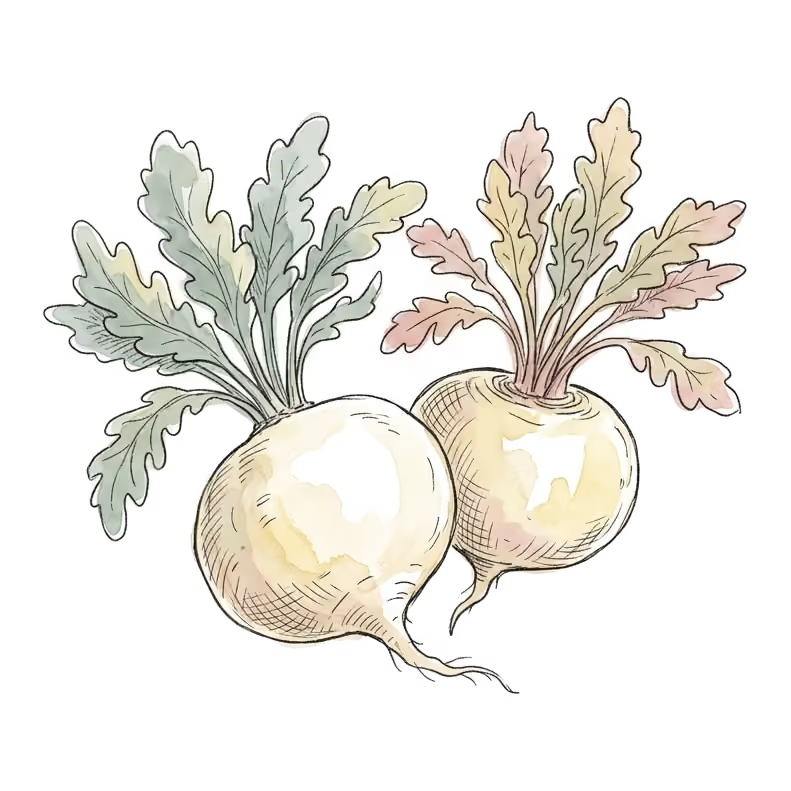
Maca Root (Lepidium meyenii)
Lepidium meyenii · also known as Peruvian ginseng, maca, ayak chichira, ayak willku
By Superfoods Advisor Editors·July 3, 2026
Maca root benefits for libido, energy, mood and fertility in men and women: what small trials show at 1.5 to 3.5 g a day, and the side effects.
Maca root (Lepidium meyenii), sold as “Peruvian ginseng,” is an Andean root vegetable in the mustard family, usually taken as a dried powder. Its best-studied benefit is sexual desire: small trials in healthy men, postmenopausal women and women on antidepressants reported improvements at 1.5 to 3.5 g a day. Evidence for energy, mood and fertility is weaker.
The plant is native to the high-altitude Andean plateau of Peru, where it has been cultivated for more than 2,000 years at elevations between 4,000 and 4,500 meters (Gonzales, 2012). Indigenous communities in the Junín and Pasco regions traditionally used the dried hypocotyl — the stout, turnip-like storage organ often called the “root” — as both a staple food and a tonic believed to support stamina, reproductive function, and resilience in harsh mountain conditions. The earliest written reference is usually traced to the chronicler Cieza de León (1553), who noted that people in the province of Bombón (present-day Junín) lived on certain roots; Father Bernabé Cobo named maca in 1653 and recorded its use for fertility (Gonzales, 2012).
Despite its common marketing label “Peruvian ginseng,” maca is not related to Panax ginseng or any plant in the Araliaceae family. It is a member of the Brassicaceae (mustard) family, making it botanically closer to broccoli and radishes than to traditional adaptogens. This distinction matters clinically: maca’s bioactive chemistry, safety profile, and mechanism of action differ substantially from ginsenosides-bearing plants. Its growing presence in the supplement market warrants a clear-eyed look at what the evidence supports and where significant gaps remain.
Evidence at a glance
Active Compounds
Maca’s bioactive profile is complex and not yet fully characterized. Several compound classes are considered pharmacologically relevant:
Glucosinolates are sulfur-containing compounds common across the Brassicaceae family. In maca, glucosinolates (particularly glucotropaeolin and m-methoxyglucotropaeolin) may contribute to hormonal and metabolic effects via their breakdown products (isothiocyanates and indoles), though the specific mechanisms in humans remain under investigation.
Macamides and macaenes are fatty acid amides and polyunsaturated fatty acids unique to Lepidium meyenii. Macamides have not been found in any other plant species (Gonzales, 2012). These compounds, found primarily in the lipid fraction of the dried root, are often proposed as contributors to the reported effects on libido and endurance, though this has not been shown directly. Macamides structurally resemble endocannabinoid-like compounds, and several synthetic macamides inhibited fatty acid amide hydrolase (FAAH) in laboratory assays (Wu et al., 2013); human pharmacokinetic data are lacking.
Alkaloids (including macaridine and imidazole alkaloids such as lepidilines A and B) have been isolated from maca extracts and show in vitro activity, but their contribution to human physiological effects is not established (Wasilewicz & Grienke, 2026).
Minerals and amino acids: Maca contains notable concentrations of iron, zinc, calcium, and potassium, along with essential amino acids. At food-level intakes, these contribute to nutritional value. At the doses used in trials (1.5–3.5 g/day), their contribution is marginal compared to dietary sources.
Color variants of maca (yellow, red, black) have different glucosinolate and macamide profiles, with rodent research suggesting black maca has the stronger effects on sperm parameters and memory, red maca on prostate size, and red and black maca on bone structure in ovariectomized rats (Gonzales, 2012). Later chemical analyses have not consistently separated the colors, and origin may matter more (Wasilewicz & Grienke, 2026). Human studies distinguishing color variants are sparse.
Evidence for Purported Benefits
Libido and Sexual Function
Evidence:Limited Three small, short RCTs, in healthy men, postmenopausal women and women with antidepressant-related dysfunction.
The most consistent signal in maca research pertains to subjective libido and sexual desire, particularly in postmenopausal women and in people experiencing antidepressant-induced sexual dysfunction.
A randomized, double-blind, placebo-controlled trial by Dording et al. (Evidence-Based Complementary and Alternative Medicine, 2015) enrolled 45 women with SSRI- or SNRI-induced sexual dysfunction. Those receiving 3.0 g/day of maca root for 12 weeks had numerically higher remission rates on sexual function scales than placebo, with the benefit concentrated in postmenopausal participants. Separately, a small double-blind crossover trial by Brooks et al. (Menopause, 2008; n=14 postmenopausal women) found that 3.5 g/day of maca for 6 weeks reduced psychological symptoms and sexual dysfunction scores on the Greene Climacteric Scale compared with placebo, without changing estradiol, FSH, LH, or SHBG.
Gonzales et al. (Andrologia, 2002) conducted an early RCT in healthy men (n=57) comparing 1,500 mg and 3,000 mg maca against placebo over 12 weeks. Subjective sexual desire improved at both doses versus placebo independent of changes in serum testosterone or estradiol, suggesting a non-hormonal mechanism.
Energy and Endurance
Evidence:Insufficient One eight-person crossover trial; time-trial gains were not significant versus placebo.
A small crossover trial by Stone et al. (Journal of Ethnopharmacology, 2009) tested 14 days of maca extract supplementation in trained male cyclists and found that 40-km time trial performance improved compared with the participants’ own baseline, but not compared with placebo; self-rated sexual desire improved versus both. The study was underpowered (n=8).
Mood and Menopausal Symptoms
Evidence:Preliminary One 20-woman crossover pilot trial with a marked early placebo effect.
In a 4-month double-blind, randomized crossover pilot trial, Meissner et al. (International Journal of Biomedical Science, 2006) gave 20 perimenopausal women aged 41–50 pre-gelatinized maca (2 g/day) or placebo for 2 months each and reported reduced menopausal discomfort on the Kupperman Menopausal Index, along with changes in serum estradiol, FSH, progesterone, and ACTH. The authors noted a distinct placebo effect early in the study.
Fertility and Sperm Parameters
Evidence:Preliminary Animal studies, one nine-man uncontrolled study and one pilot RCT that raised sperm concentration only.
Several animal studies (primarily in rats and mice) report increases in sperm count and motility with maca (Gonzales, 2012). In humans, a small uncontrolled study by Gonzales et al. (Asian Journal of Andrology, 2001; n=9) reported increased seminal volume, sperm count, and motility in healthy men after 4 months, with no change in reproductive hormones. A double-blind, placebo-controlled pilot trial in 69 men with mild asthenozoospermia or oligozoospermia found higher sperm concentration after 12 weeks of 2 g/day maca, but no difference in sperm motility, morphology, or semen volume (Alcalde & Rabasa, 2020).
Typical Use and Dosing
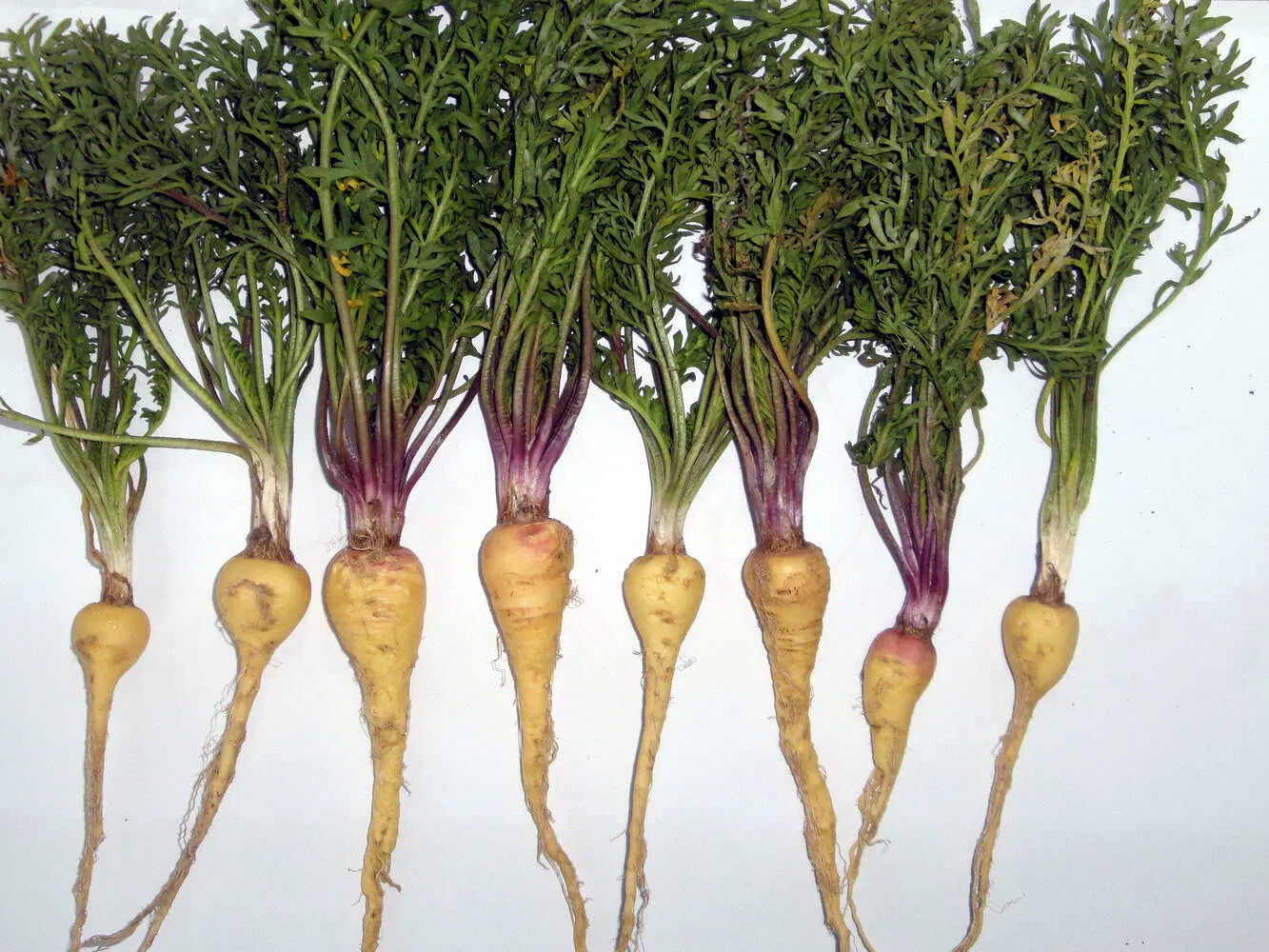 Photo: Vahe Martirosyan, CC BY 2.5, via Wikimedia Commons
Traditional food use: In the Andes, the hypocotyls are dried naturally and then boiled in water before eating, most often taken as a juice-like drink; maca is also extracted in alcohol. Highland communities advise against eating fresh maca, though its effects have not been studied (Gonzales, 2012).
Supplement dosing used in trials:
- Libido/sexual function: 1,500–3,500 mg/day of dried root powder (Gonzales et al., 2002; Brooks et al., 2008; Dording et al., 2015)
- Duration: trials have run from 2 weeks to 4 months, most often 6–12 weeks; in the 2002 trial in men, the improvement in sexual desire was first seen at 8 weeks (Gonzales et al., 2002)
- Gelatinized maca (dried powder extruded under heat, pressure, and moisture so the starch is pre-cooked) is described as more digestible (Minich et al., 2024, an industry-funded review) and was used in several trials, including Gonzales et al. (2002) and Meissner et al. (2006); raw powder may be harder to tolerate for people with digestive complaints
No standardized extract ratio equivalent to whole root has been established for clinical use. Most supplement products list quantities as dried root equivalents or as gelatinized powder weight. Third-party-tested products specifying glucosinolate or macamide content offer more reproducibility, though validated assay methods are not yet universally adopted.
Gelatinized maca powder is used in one of the superfood smoothie recipes. The adaptogens evidence review compares maca’s trials with those for ashwagandha, rhodiola and ginseng.
Safety, Side Effects, and Interactions
No toxic effects have been reported from traditional consumption of boiled maca in Peru (Gonzales, 2012). In a 12-week trial of 175 adults, 3 g/day of red or black maca extract was well tolerated, with no serious adverse effects (Gonzales-Arimborgo et al., 2016; the senior author manages a nutraceutical company). A 90-day trial in people with metabolic syndrome reported a moderate rise in AST (a liver enzyme) and diastolic blood pressure with maca alone (Valentová et al., 2008). Long-term safety has not been evaluated.
Thyroid considerations: Like other Brassica vegetables, maca contains glucosinolates, whose breakdown products may affect thyroid function at excessive intakes (Wasilewicz & Grienke, 2026). Human data on maca and thyroid function are lacking. Because heat and moisture can inactivate goitrogens, gelatinization may lower their content (Minich et al., 2024), but the reduction has not been measured for maca. Individuals with hypothyroidism should consult a healthcare provider before supplementing.
Hormonal conditions: Although maca does not appear to directly alter sex hormone levels in most trials, its traditional use as a reproductive tonic means that individuals with hormone-sensitive conditions (e.g., estrogen-receptor-positive breast cancer, uterine fibroids, endometriosis) should exercise caution and discuss use with their oncologist or physician.
Pregnancy and breastfeeding: Insufficient safety data exist for supplemental doses during pregnancy or lactation. Traditional food-level consumption in Andean communities is not equivalent to supplemental use.
Drug interactions: Herb-drug interactions have not been systematically studied. Given maca’s reported endocrine and neuroactive effects, caution may be warranted alongside hormone-modulating therapies or centrally acting medications (Wasilewicz & Grienke, 2026); discuss use with a prescriber.
Product Selection Criteria
When evaluating maca supplements, consider:
- Form: Gelatinized maca is preferred for digestibility and was the form used in several human trials. Raw powder may be harder to tolerate in sensitive individuals.
- Color variant: Yellow maca is the most common. Black and red variants are marketed for specific uses (cognition and prostate health, respectively), but the color-specific evidence comes mainly from rodent studies.
- Processing disclosure: Look for products that specify gelatinization or other processing methods; raw vs. gelatinized comparisons are relevant for GI tolerability.
- Third-party testing: USP Verified and NSF certification cover label accuracy and contaminant limits; Informed Sport screens only for substances banned in sport. Heavy metal testing matters because lead, cadmium, and arsenic can accumulate from soil (Wasilewicz & Grienke, 2026).
- Country of origin: Authentic Peruvian maca is considered the reference standard; Lepidium meyenii grown in China can differ in phytochemical profile, for example in macamide content (Wasilewicz & Grienke, 2026).
- Dose transparency: Prefer products listing actual mass per serving (in mg) rather than proprietary blends with undisclosed ingredient weights.
Frequently Asked Questions
What are the benefits of maca root for women?
Two small trials in women reported improvements. In 45 women with antidepressant-related sexual dysfunction, 3 g a day for 12 weeks gave higher remission rates than placebo, mainly after menopause. In 14 postmenopausal women, 3.5 g a day eased psychological symptoms and sexual dysfunction scores without changing estradiol or FSH. A 20-woman pilot reported less menopausal discomfort. The evidence is limited.
What are the benefits of maca root for men?
In a 12-week trial of 57 healthy men, 1.5 g and 3 g a day improved self-reported sexual desire compared with placebo, without changing testosterone. A pilot trial in 69 men with mild sperm abnormalities found higher sperm concentration after 12 weeks of 2 g a day, but no change in motility. In eight trained cyclists, maca did not beat placebo on time-trial performance.
What happens if you take maca every day?
Daily use is how the trials tested it, typically for 6 to 12 weeks, and a 12-week study of 3 g a day in 175 adults reported no serious side effects. One 90-day trial in people with metabolic syndrome noted a moderate rise in a liver enzyme and diastolic blood pressure. Effects of use beyond a few months have not been evaluated.
Who should not take maca?
There are no safety data for supplemental maca in pregnancy or breastfeeding. Because it contains glucosinolates, people with hypothyroidism should check with a clinician first, and people with hormone-sensitive conditions such as estrogen-receptor-positive breast cancer, fibroids or endometriosis should discuss it with their doctor. Drug interactions have not been systematically studied.
Is maca better than ashwagandha?
They are used for different things and are not interchangeable. Maca’s small trials focus on sexual desire, while ashwagandha has more trials for stress and sleep, including meta-analyses, though those are also rated low certainty. Ashwagandha carries more safety warnings, including rare liver injury. Neither has been compared head to head with the other.
References
Show all 13 referencesShow fewer
- Gonzales, G. F., Córdova, A., Vega, K., Chung, A., Villena, A., Góñez, C., & Castillo, S. (2002). Effect of Lepidium meyenii (MACA) on sexual desire and its absent relationship with serum testosterone levels in adult healthy men. Andrologia, 34(6), 367–372.
- Brooks, N. A., Wilcox, G., Walker, K. Z., Ashton, J. F., Cox, M. B., & Stojanovska, L. (2008). Beneficial effects of Lepidium meyenii (maca) on psychological symptoms and measures of sexual dysfunction in postmenopausal women are not related to estrogen or androgen content. Menopause, 15(6), 1157–1162.
- Stone, M., Ibarra, A., Roller, M., Zangara, A., & Stevenson, E. (2009). A pilot investigation into the effect of maca supplementation on physical activity and sexual desire in sportsmen. Journal of Ethnopharmacology, 126(3), 574–576.
- Gonzales, G. F. (2012). Ethnobiology and ethnopharmacology of Lepidium meyenii (maca), a plant from the Peruvian highlands. Evidence-Based Complementary and Alternative Medicine, 2012, 193496.
- Meissner, H. O., Reich-Bilinska, H., Mscisz, A., & Kedzia, B. (2006). Therapeutic effects of pre-gelatinized maca (Lepidium peruvianum Chacon) used as a non-hormonal alternative to HRT in perimenopausal women — clinical pilot study. International Journal of Biomedical Science, 2(2), 143–159.
- Valentová, K., Stejskal, D., Bartek, J., et al. (2008). Maca (Lepidium meyenii) and yacon (Smallanthus sonchifolius) in combination with silymarin as food supplements: in vivo safety assessment. Food and Chemical Toxicology, 46(3), 1006–1013.
- Dording, C. M., Schettler, P. J., Dalton, E. D., et al. (2015). A double-blind placebo-controlled trial of maca root as treatment for antidepressant-induced sexual dysfunction in women. Evidence-Based Complementary and Alternative Medicine, 2015, 949036.
- Gonzales, G. F., Cordova, A., Gonzales, C., Chung, A., Vega, K., & Villena, A. (2001). Lepidium meyenii (Maca) improved semen parameters in adult men. Asian Journal of Andrology, 3(4), 301–303.
- Wu, H., Kelley, C. J., Pino-Figueroa, A., Vu, H. D., & Maher, T. J. (2013). Macamides and their synthetic analogs: evaluation of in vitro FAAH inhibition. Bioorganic & Medicinal Chemistry, 21(17), 5188–5197.
- Wasilewicz, A., & Grienke, U. (2026). Maca (Lepidium meyenii) as a functional food and dietary supplement: a review on analytical studies. Foods, 15(2), 306.
- Minich, D. M., Ross, K., Frame, J., et al. (2024). Not all maca is created equal: a review of colors, nutrition, phytochemicals, and clinical uses. Nutrients, 16(4), 530.
- Alcalde, A. M., & Rabasa, J. (2020). Does Lepidium meyenii (Maca) improve seminal quality? Andrologia, 52(10), e13755.
- Gonzales-Arimborgo, C., Yupanqui, I., Montero, E., et al. (2016). Acceptability, safety, and efficacy of oral administration of extracts of black or red maca (Lepidium meyenii) in adult human subjects: a randomized, double-blind, placebo-controlled study. Pharmaceuticals, 9(3), 49.
Related content
More in Roots & Herbs
- Ashwagandha (Withania somnifera)
Ashwagandha side effects, who should avoid it, and drug interactions, plus what trials show for stress, sleep and strength at clinical doses.
- Basil (Ocimum basilicum)
Basil benefits: what lab and human studies show, vitamin K per serving, sweet basil vs holy basil, and the estragole and warfarin cautions.
- Black Pepper (Piper nigrum)
Black pepper benefits: how piperine raises absorption of curcumin and some drugs, what human studies show, side effects, and drug interactions.
- Cilantro / Coriander (Coriandrum sativum)
Cilantro vs parsley: how the two herbs differ in flavor, vitamin K and vitamin C, plus what the evidence says about cilantro benefits and safety.
- Cinnamon (Cinnamomum verum / C. cassia)
Ceylon cinnamon vs cassia: coumarin levels and liver risk, how much is safe per day, and what trials show for blood sugar and cholesterol.
- Garlic (Allium sativum)
Garlic benefits for blood pressure, cholesterol and colds: what trials show, how much raw garlic or supplement they used, and bleeding risks.

Curated by Superfoods Advisor Editors·Last updated