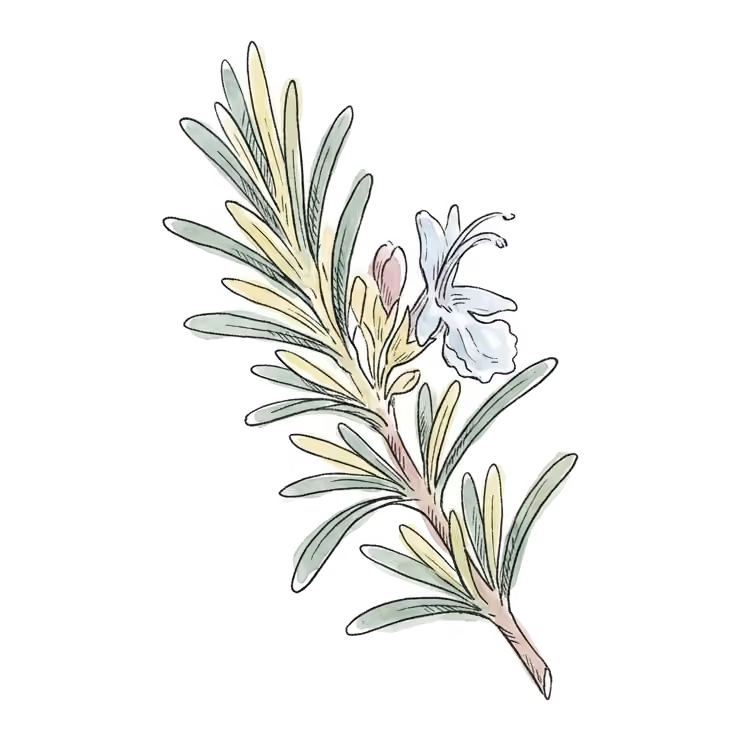
Rosemary (Salvia rosmarinus)
Salvia rosmarinus · also known as common rosemary, Rosmarinus officinalis, dew of the sea, compass weed
By Superfoods Advisor Editors·July 3, 2026
Rosemary benefits: what studies show for hair growth, memory and digestion, how rosemary oil compared with minoxidil, doses, and safety cautions.
Rosemary (Salvia rosmarinus, long known as Rosmarinus officinalis) is a Mediterranean culinary herb in the mint family. Its most-discussed benefits are hair growth and memory: in one unblinded trial, a rosemary oil lotion gave hair-count gains similar to 2% minoxidil after six months, while small studies of its aroma and leaf powder gave mixed cognitive results.
The plant is an aromatic evergreen shrub in the Lamiaceae family, indigenous to the Mediterranean basin and naturalized in temperate regions worldwide. Its needle-like leaves and pale-blue flowers have made it a garden staple for millennia. The genus reassignment from Rosmarinus to Salvia was formalized in phylogenetic studies published around 2017, though Rosmarinus officinalis remains the name found in most clinical literature and on most product labels.
Rosemary’s historical role spans cuisine, medicine, and ritual. Its association with remembrance is old enough to appear in Shakespeare’s Hamlet (“rosemary, that’s for remembrance”), and Greek students are said to have worn rosemary garlands during examinations, a folklore connection to memory and cognition that has attracted modern scientific attention. In traditional medicine, it was used for digestive complaints, headaches, circulatory support, and hair loss. Contemporary research has moved beyond folklore to investigate rosemary’s phytochemistry, with particular focus on its potent antioxidant compounds and their effects on neurological function and scalp health.
Evidence at a glance
Active Compounds
Rosemary contains a distinctive combination of volatile terpenoids and non-volatile polyphenols:
Carnosic acid: A diterpene phenol that, with its derivatives, is the most abundant polyphenolic group in rosemary leaf; in a comparison of six Mediterranean cultivars, phenolic diterpenes reached about 2.5% of leaf dry weight in the richest one (Baptista et al., 2024), and levels vary with cultivar, region, and season. Carnosic acid is a potent lipophilic antioxidant; in one analysis it stayed stable when extracted into olive oil but broke down in alcohol tinctures (Kallimanis et al., 2024). It oxidizes readily to carnosol, another active diterpene. In cell and animal studies, carnosic acid and its metabolites activate the Nrf2/ARE (antioxidant response element) pathway, upregulating cellular antioxidant enzymes (heme oxygenase-1, NAD(P)H quinone oxidoreductase 1). This mechanism is of interest in neuroprotective research.
Rosmarinic acid: A hydroxycinnamic acid ester found in high concentrations in rosemary as well as other Lamiaceae herbs (oregano, basil, sage, perilla). It contributes antioxidant, anti-inflammatory, and mild antimicrobial activity. Rosmarinic acid is water-soluble (unlike carnosic acid) and better extracted by aqueous preparations (teas, water extracts) than lipophilic preparations.
1,8-Cineole (eucalyptol): Usually the main volatile compound in rosemary essential oil, though its share depends on origin: the European Pharmacopoeia sets 38–55% for Moroccan and Tunisian oils but 16–25% for Spanish oils (EMA HMPC, 2024). 1,8-cineole is a weak acetylcholinesterase inhibitor in vitro (Perry et al., 2000). This property has generated interest in cognition research, as acetylcholinesterase inhibition is the mechanism of several pharmaceutical drugs approved for Alzheimer’s disease (donepezil, rivastigmine). Whether rosemary oil inhalation or supplementation delivers pharmacologically relevant cineole levels to the brain in humans is an active area of investigation.
Ursolic acid: A pentacyclic triterpenoid with anti-inflammatory, anti-tumor (preclinical), and muscle-anabolic properties in animal models. Ursolic acid has been studied for its potential to promote muscle mass and reduce fat, though human data remain sparse.
Camphor and borneol: Monoterpenes in the essential oil that contribute antimicrobial and topical analgesic properties. Camphor is neurotoxic at high doses, which is relevant to concentrated essential oil products.
Flavonoids: Including apigenin, luteolin, and diosmin, present in smaller amounts and contributing anti-inflammatory and antioxidant activity.
Evidence for Purported Benefits
Cognitive Performance and Alertness
Evidence:Limited A few small aroma and dried-leaf studies; one lacked a comparison group, and the leaf trial found an odd dose response.
The “rosemary for remembrance” claim has attracted genuine scientific interest and produced some notable findings:
Moss and Oliver (Therapeutic Advances in Psychopharmacology, 2012) had 20 healthy volunteers perform serial subtraction and visual information processing tasks in a cubicle diffused with rosemary essential oil aroma, and found that performance (both speed and accuracy) correlated with blood levels of absorbed 1,8-cineole. The study had no comparison condition, so it shows an association rather than an effect; an earlier trial in 144 healthy adults (Moss et al., 2003) compared rosemary aroma, lavender aroma, and no aroma.
Pengelly et al. (Journal of Medicinal Food, 2012) gave 28 older adults placebo and four doses of dried rosemary leaf powder in a randomized, double-blind crossover trial and found that the lowest dose (750 mg) improved speed of memory compared with placebo, while the highest dose (6,000 mg) impaired it. The U-shaped dose-response (higher doses impaired rather than enhanced performance) was unexpected and suggests complexity in dosing.
Overall, the mechanistic plausibility via 1,8-cineole acetylcholinesterase inhibition is reasonable, but human trial evidence remains inadequate to support clinical cognitive enhancement claims. Long-term trials in people with cognitive impairment are lacking. The brain health superfoods guide covers foods with more extensive cognition research.
Hair Growth
Evidence:Preliminary One unblinded RCT of topical oil against 2% minoxidil in 100 men.
A comparative trial by Panahi et al. (Skinmed, 2015) randomized 100 men with androgenetic alopecia (male pattern hair loss) to either 2% minoxidil solution or a rosemary oil lotion standardized to 1,8-cineole, 1 mL applied topically twice daily for 6 months (Gupta et al., 2025). Both groups showed significant improvements in hair count from baseline at 6 months, with no significant difference between groups; the trial was not designed as a formal non-inferiority test, so this shows comparable results rather than proven equivalence. Scalp itching was more common in the minoxidil group.
The proposed mechanism involves inhibition of 5-alpha-reductase (the enzyme that converts testosterone to dihydrotestosterone, DHT, which drives follicle miniaturization in pattern hair loss). In laboratory and mouse studies, a rosemary leaf extract inhibited this enzyme and restored hair regrowth in testosterone-treated mice, with 12-methoxycarnosic acid identified as the active constituent (Murata et al., 2013). Topical anti-inflammatory effects reducing scalp inflammation may also contribute.
Antioxidant and Anti-Inflammatory Activity
Evidence:Insufficient An authorized food preservative, but no adequate human trials of antioxidant or anti-inflammatory effects.
Rosemary extract is authorized in the EU as a natural antioxidant food additive (E392), following a safety assessment by the European Food Safety Authority (EFSA, 2008), for preservation of fats and oils. This food science application is well-established. Whether ingested rosemary polyphenols reduce clinically meaningful oxidative stress or inflammation in humans is less clearly established. Adequately powered clinical endpoint trials are lacking.
Digestive Support
Evidence:Insufficient Traditional and monograph use; choleretic effects seen in animals, with little human trial data.
Commission E (Germany) approved rosemary leaf for “dyspeptic complaints” (bloating, digestive discomfort), and the EU herbal monograph lists it as a traditional herbal medicine for symptomatic relief of dyspepsia (EMA HMPC, 2024); choleretic (bile-stimulating) properties have been observed in animal models. Human RCT data for digestive indications are limited.
Typical Use and Dosing
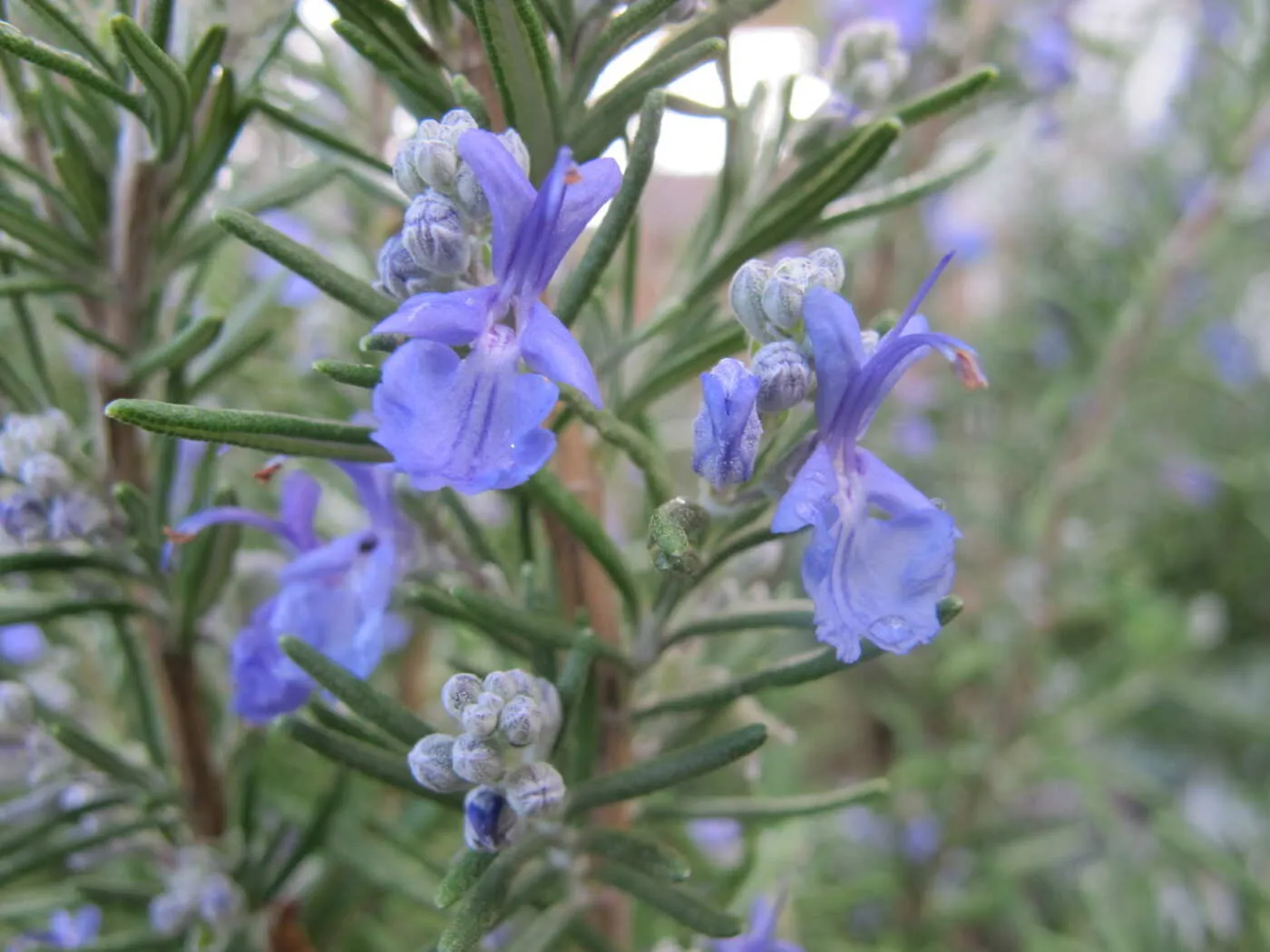 Photo: Margalob, CC BY-SA 4.0, via Wikimedia Commons
Culinary use: Fresh or dried rosemary leaf is used widely in Mediterranean cooking (1–2 teaspoons per dish). Culinary exposure provides some carnosic acid and rosmarinic acid, though far less than concentrated extracts. The cautions below concern medicinal doses and essential oils rather than seasoning.
Dried leaf supplement:
- Traditional dose: Commission E listed 4–6 g of dried leaf per day for dyspeptic complaints; the EU herbal monograph gives 1–2 g in 150–250 mL of boiling water as a tea, 2–3 times daily (2–6 g per day), and does not recommend it under age 12 (EMA HMPC, 2024)
- Capsule products vary widely in extract type and strength, and the cognition trials above used dried leaf powder or aroma rather than standardized extracts; follow the product label
Rosemary essential oil (topical):
- For hair growth: rosemary essential oil diluted in a carrier oil (jojoba, coconut), applied to the scalp and massaged in before washing; allow about 6 months before assessing effect, since the Panahi trial found no change in hair count at 3 months and gains only at 6 (Panahi et al., 2015)
- Do not apply undiluted essential oil directly to the scalp or skin
- For aromatic use: diffusion or direct inhalation of diluted oil
Rosemary essential oil (internal): Internal use of rosemary essential oil is generally not recommended outside of supervised clinical settings due to camphor content and risk of neurological toxicity at high doses.
The anti-inflammatory pantry guide notes one practical detail for cooks: rosemary extract added to food can reduce non-heme iron absorption.
Safety, Side Effects, and Interactions
Culinary use: The cautions below concern concentrated extracts, medicinal doses, and essential oils, not rosemary used as a seasoning; contact allergy is the main exception (see below).
Supplement and essential oil use:
- Seizure risk: Camphor in rosemary essential oil is a known convulsant at high doses. Rosemary oil is among the essential oils long recognized as convulsant, and a case series described seizures after therapeutic use of oils from this group (Burkhard et al., 1999). The EMA found no human data linking rosemary leaf extracts to seizures, and it assesses rosemary oil for skin use only (EMA HMPC, 2024). Do not take the essential oil by mouth, and people with epilepsy should ask a clinician before using concentrated products.
- Pregnancy: The following cautions concern medicinal doses, not seasoning. Medicinal doses (particularly essential oil) are traditionally considered emmenagogues (uterine stimulants), and the EU herbal monograph does not recommend medicinal rosemary leaf during pregnancy or breastfeeding because safety has not been established (EMA HMPC, 2024). Avoid them without medical guidance.
- Biliary disease: The same monograph warns against oral medicinal use with bile duct obstruction, cholangitis, gallstones, liver disease, or other biliary disorders that need medical supervision.
- Anticoagulant interactions: Carnosol, a rosemary diterpene, inhibited platelet aggregation in a laboratory study (Lee et al., 2006); human data are lacking. Individuals on warfarin or other anticoagulants should consult their healthcare provider before supplementing.
- Antidiabetic medications: Animal studies conflict: a leaf extract lowered blood glucose in diabetic rabbits (Bakirel et al., 2008), while the essential oil raised it in another rabbit study (al-Hader et al., 1994); individuals on insulin or oral hypoglycemic agents should be monitored if supplementing at medicinal doses.
- Iron absorption: As with other polyphenol-rich herbs, rosemary extract may reduce non-heme iron absorption. In 14 young women, a phenolic-rich rosemary extract added to a meal lowered non-heme iron absorption from 7.5% to 6.4% (Samman et al., 2001); this matters mainly for people with low iron stores who take concentrated extracts with meals.
- Allergy: Allergic contact dermatitis from rosemary extracts and raw leaf has been reported, with carnosol implicated as a common cause, and two cases suggested cross-reactivity with thyme (Miroddi et al., 2014). Patch-test a diluted product before scalp use.
Product Selection Criteria
- Form for hair use: Rosemary essential oil diluted in a carrier oil is the relevant form for topical hair growth. Products offering pre-diluted rosemary scalp serums should specify cineole and carnosic acid content where possible.
- Standardization for cognitive use: Look for extracts standardized to ursolic acid, rosmarinic acid, or carnosic acid content if purchasing for internal use. Rosmarinic acid is one of the more commonly assayed and verified markers.
- Essential oil authentication: GC/MS analysis (gas chromatography/mass spectrometry) data from the manufacturer verifies the terpene profile and can detect adulteration. Compare the report with the European Pharmacopoeia range for the oil’s stated origin; cineole runs about 38–55% in Moroccan/Tunisian oils but 16–25% in Spanish oils, so no single cineole figure marks a genuine oil (EMA HMPC, 2024).
- Camphor content: Products with verified camphor content are preferable. Pharmacopoeia-compliant oils range from 5–15% camphor (Moroccan/Tunisian) to 13–21% (Spanish) (EMA HMPC, 2024), so a lower-camphor oil is a reasonable choice where seizure risk is a concern, though no camphor threshold has been shown to separate safe from unsafe oils.
- Third-party testing: USP Verified and NSF certification cover label accuracy and contaminant screening; Informed Sport screens for banned substances only and does not test for contaminants or verify identity.
- Sustainability: Wild harvesting from Mediterranean hillsides is common; responsibly sourced or organically cultivated products are preferable given growing demand.
Frequently Asked Questions
Does rosemary oil help hair grow?
Preliminary evidence suggests it may help with pattern hair loss. In a 2015 trial, 100 men applied either a rosemary oil lotion or 2% minoxidil twice daily, and both groups had more hair at six months, with no significant difference between them. The trial was unblinded and not designed to prove equivalence, and neither group improved at three months. Larger trials are needed.
How do you use rosemary oil for hair?
The trial used 1 mL of a rosemary oil lotion applied to the scalp twice a day. At home, the essential oil is usually diluted in a carrier oil such as jojoba or coconut and massaged in before washing; it should never be applied undiluted. Patch-test first, since contact allergy to rosemary has been reported, and allow about six months before judging results.
Is rosemary good for memory?
The evidence is limited. Small studies linked rosemary aroma to faster, more accurate mental arithmetic, and one crossover trial found 750 mg of dried leaf improved memory speed in older adults while a higher dose impaired it. A proposed mechanism is weak acetylcholinesterase inhibition by 1,8-cineole. No long-term trial has tested rosemary in people with cognitive decline.
How much rosemary is safe to eat?
Culinary amounts, typically 1 to 2 teaspoons per dish, are not a concern for most people. As a medicinal tea, the EU monograph gives 2 to 6 g of dried leaf a day for adults and does not recommend it under age 12. Higher medicinal doses are not recommended in pregnancy or with gallbladder or liver disease, and the essential oil should not be swallowed.
Is rosemary good for you?
As a seasoning, rosemary adds flavor along with carnosic acid and rosmarinic acid, antioxidants that also make its extract useful as a food preservative. Whether eating rosemary reduces oxidative stress or inflammation in people has not been shown in adequate trials. Its traditional use for indigestion is recognized in the EU as traditional use, not proven efficacy.
References
Show all 18 referencesShow fewer
- Moss, M., Cook, J., Wesnes, K., & Duckett, P. (2003). Aromas of rosemary and lavender essential oils differentially affect cognition and mood in healthy adults. International Journal of Neuroscience, 113(1), 15–38.
- Moss, M., & Oliver, L. (2012). Plasma 1,8-cineole correlates with cognitive performance following exposure to rosemary essential oil aroma. Therapeutic Advances in Psychopharmacology, 2(3), 103–113.
- Panahi, Y., Taghizadeh, M., Marzony, E. T., & Sahebkar, A. (2015). Rosemary oil vs minoxidil 2% for the treatment of androgenetic alopecia: A randomized comparative trial. Skinmed, 13(1), 15–21.
- Pengelly, A., Snow, J., Mills, S. Y., Scholey, A., Wesnes, K., & Butler, L. R. (2012). Short-term study on the effects of rosemary on cognitive function in an elderly population. Journal of Medicinal Food, 15(1), 10–17.
- European Food Safety Authority (EFSA) Panel on Food Additives, Flavourings, Processing Aids and Materials in Contact with Food (AFC). (2008). Use of rosemary extracts as a food additive: Scientific opinion. EFSA Journal, 6(6), 721.
- Baptista, A., et al. (2024). Unlocking the hidden potential of rosemary (Salvia rosmarinus Spenn.): New insights into phenolics, terpenes, and antioxidants of Mediterranean cultivars. Plants, 13(23), 3395.
- European Medicines Agency, Committee on Herbal Medicinal Products (HMPC). (2024). Assessment report on Rosmarinus officinalis L., aetheroleum and Rosmarinus officinalis L., folium (Revision 1). EMA/HMPC/681037/2021.
- European Medicines Agency, Committee on Herbal Medicinal Products (HMPC). (2024). European Union herbal monograph on Rosmarinus officinalis L., folium (Revision 1).
- Burkhard, P. R., Burkhardt, K., Haenggeli, C. A., & Landis, T. (1999). Plant-induced seizures: Reappearance of an old problem. Journal of Neurology, 246(8), 667–670.
- Samman, S., Sandström, B., Toft, M. B., et al. (2001). Green tea or rosemary extract added to foods reduces nonheme-iron absorption. American Journal of Clinical Nutrition, 73(3), 607–612.
- Kallimanis, P., Magiatis, P., Panagiotopoulou, A., Ioannidis, K., & Chinou, I. (2024). Extraction optimization and qualitative/quantitative determination of bioactive abietane-type diterpenes from three Salvia species (common sage, Greek sage and rosemary) by 1H-qNMR. Molecules, 29(3), 625.
- Gupta, A. K., Wang, H., Wang, T., & Talukder, M. (2025). Do non-prescription products help in managing androgenic alopecia? Skin Appendage Disorders.
- Perry, N. S., Houghton, P. J., Theobald, A., Jenner, P., & Perry, E. K. (2000). In-vitro inhibition of human erythrocyte acetylcholinesterase by Salvia lavandulaefolia essential oil and constituent terpenes. Journal of Pharmacy and Pharmacology, 52(7), 895–902.
- Murata, K., Noguchi, K., Kondo, M., et al. (2013). Promotion of hair growth by Rosmarinus officinalis leaf extract. Phytotherapy Research, 27(2), 212–217.
- Lee, J. J., Jin, Y. R., Lim, Y., et al. (2006). Antiplatelet activity of carnosol is mediated by the inhibition of TXA2 receptor and cytosolic calcium mobilization. Vascular Pharmacology, 45(3), 148–153.
- Bakirel, T., Bakirel, U., Keleş, O. U., Ulgen, S. G., & Yardibi, H. (2008). In vivo assessment of antidiabetic and antioxidant activities of rosemary (Rosmarinus officinalis) in alloxan-diabetic rabbits. Journal of Ethnopharmacology, 116(1), 64–73.
- al-Hader, A. A., Hasan, Z. A., & Aqel, M. B. (1994). Hyperglycemic and insulin release inhibitory effects of Rosmarinus officinalis. Journal of Ethnopharmacology, 43(3), 217–221.
- Miroddi, M., Calapai, G., Isola, S., Minciullo, P. L., & Gangemi, S. (2014). Rosmarinus officinalis L. as cause of contact dermatitis. Allergologia et Immunopathologia, 42(6), 616–619.
More in Roots & Herbs
- Ashwagandha (Withania somnifera)
Ashwagandha side effects, who should avoid it, and drug interactions, plus what trials show for stress, sleep and strength at clinical doses.
- Basil (Ocimum basilicum)
Basil benefits: what lab and human studies show, vitamin K per serving, sweet basil vs holy basil, and the estragole and warfarin cautions.
- Black Pepper (Piper nigrum)
Black pepper benefits: how piperine raises absorption of curcumin and some drugs, what human studies show, side effects, and drug interactions.
- Cilantro / Coriander (Coriandrum sativum)
Cilantro vs parsley: how the two herbs differ in flavor, vitamin K and vitamin C, plus what the evidence says about cilantro benefits and safety.
- Cinnamon (Cinnamomum verum / C. cassia)
Ceylon cinnamon vs cassia: coumarin levels and liver risk, how much is safe per day, and what trials show for blood sugar and cholesterol.
- Garlic (Allium sativum)
Garlic benefits for blood pressure, cholesterol and colds: what trials show, how much raw garlic or supplement they used, and bleeding risks.

Curated by Superfoods Advisor Editors·Last updated